

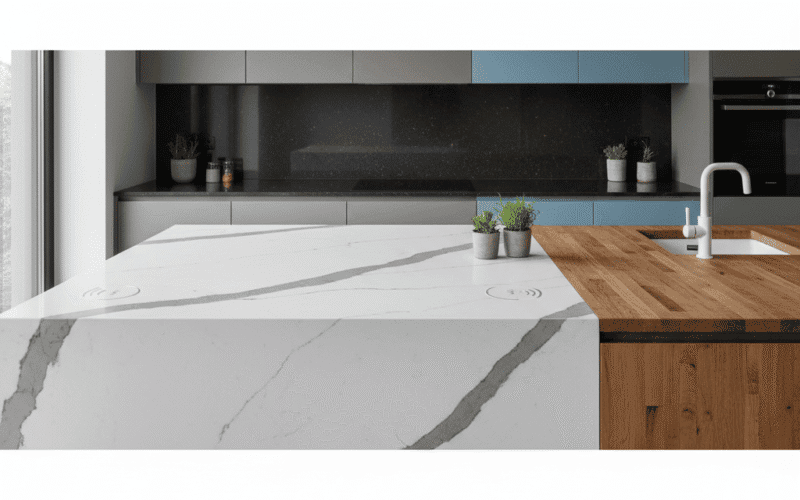
Choosing a new kitchen countertop changes the whole vibe of a home and shapes how the kitchen works every day. The perfect countertop becomes the room’s center, blending cool style with serious durability. Imagine a surface that shines with the latest trends but still stands strong against spills and chopping for years to come. This write-up shows eye-catching styles and smart tricks to pick a countertop that looks good forever. Food lovers and design fans will find ideas that make cooking and hanging out in the kitchen way more enjoyable. Keep reading to discover secrets that transform a simple countertop into the kitchen’s true showstopper.
Below you will find clear information on materials finishes and installation choices. I focus on what matters most to homeowners style longevity cleaning and realistic budget ranges so you can make a confident decision that fits your lifestyle.
What counts as a modern countertop look
Modern countertops are about more than current popularity. They balance appearance with usability. Recent preferences lean toward natural textures gentle color palettes and surfaces that hide wear while showing character. People are choosing materials that look good with a range of cabinet colors and lighting rather than matching every component exactly.
A modern kitchen surface often includes one or more of the following elements soft veining or subtle patterning a matte finish warm neutral tones or a two tone layout where an island differs from perimeter counters. Small design choices like edge style and an integrated sink make a large visual impact.
Top materials to consider right now
Material choice is the foundation of any countertop decision. Below are the key options homeowners encounter and the practical pros and cons of each.
- Quartz durable low maintenance and available in many colors and patterns. It resists staining and needs no sealing.
- Granite natural stone with unique patterns. Very heat resistant but may require periodic sealing to protect against stains.
- Marble classic and elegant with dramatic veining. Softer than other stones so it needs more care in high use kitchens.
- Butcher block warm and forgiving to knives when maintained with oil. It can dent and stain but feels welcoming and ages nicely if cared for.
- Porcelain strong and thin and available in large format slabs that mimic stone while resisting heat and staining. Its low porosity makes it a hygienic option.
- Recycled glass and composite a choice for those seeking a unique look and sustainability options. These surfaces can be durable but vary by manufacturer.
- Laminate cost effective and available in many patterns that imitate natural stone. It is not as heat resistant as harder surfaces and can chip over time.
Why finish and texture matter
Finish affects both looks and wear characteristics. High gloss provides a reflective surface that brightens a room but shows scratches and fingerprints more easily. Matte finishes hide smudges and provide a more tactile surface yet they can show water marks on certain materials.
Textured finishes such as leathered or honed surfaces give stone a soft appearance and conceal small marks. These finishes pair well with rustic or transitional kitchens where a perfect mirror finish would feel out of place.
Examples of finishes and where they work best
- Polished suits contemporary spaces with modern hardware and high contrast color schemes.
- Honed blends with painted cabinetry and natural wood floors offering a quieter look.
- Leathered creates a tactile element that hides fingerprints and pairs well with muted metal fixtures.
Design trends that will stay relevant
Some trends are fleeting while others become foundational. Current design directions include integrated sinks that create a seamless look and waterfall edges that turn a countertop into a dominant visual element. Two tone kitchens remain popular with perimeter counters in one color and islands in another for contrast.
Another notable pattern is the preference for warm neutrals and soft veining. Those choices help a kitchen feel inviting and age well with shifting styles. For practical inspiration check this article on kitchen countertop trends because it highlights three options that are showing up in recent installations and why homeowners select them.
Edge profiles and integrated features that lift a design
Edges affect how a countertop reads from a distance and how comfortable it feels to touch. A simple eased edge is practical and timeless. A mitered edge creates a thicker look without extra material thickness. Waterfall edges make islands feel like sculptural pieces. Think about how much visual weight you want the counter to carry in the room.
Integrated sinks and backsplashes
Integrated sinks can be formed from the same slab or a matching material. They offer clean lines and fewer seams which helps with maintenance and creates a modern look. Full height backsplashes in the same material give a cohesive appearance and simplify cleaning at the wall junctions.
Seams placement and visual flow
Seam placement is both an aesthetic and practical concern. Large panels reduce visible seams but can be more expensive. When seams are necessary place them where they fall at cabinet joints or under overhangs to keep the surface visually consistent.
Maintenance tips for different materials
Understanding upkeep needs will help you choose a material that matches your household routines. Below are straightforward care guidelines to keep surfaces looking their best.
- Quartz and porcelain wipe with a gentle cleaner and avoid abrasive pads. No sealing required.
- Granite and marble use mild soap and water for daily cleaning and apply a food safe sealant as recommended by the fabricator.
- Butcher block clean spills quickly and treat the surface with mineral oil to prevent drying and reduce stain risk.
- Recycled composites follow the manufacturer instructions because formulations vary widely.
- Laminate avoid excessive water at seams and use cutting boards to prevent scratches.
Small habits protect countertops. Use trivets for hot pans avoid cutting directly on stone and promptly blot acidic spills like lemon or wine on softer stones to prevent etching.
Budget considerations and return on investment
Cost depends on material slab size fabrication complexity and installation. As a general guide expect entry level laminate or laminate alternatives to run at the low end while natural stones and engineered quartz occupy mid to higher price points. Porcelain and higher grade stones can reach the top end when installed in large formats or with complex edges.
Think about perceived value when choosing. A well chosen high quality counter can raise the appeal of your kitchen to buyers and may improve resale value. On the other hand a tasteful mid range option paired with updated cabinetry hardware and good lighting often produces a pleasing and cost conscious result.
Installation and working with fabricators
Finding a fabricator who measures and installs correctly saves time and prevents surprises. Ask potential fabricators about their warranty experience what template method they use and how they protect floors and cabinets during installation. Always confirm who is responsible for slab selection and any additional charges for seams or complex cuts around cooktops or faucets.
When ordering slabs inspect the material in person if possible. Patterns and tones vary from slab to slab and seeing the full piece helps you anticipate veining and color placement in your finished layout. For large islands consider extra attention to support and overhang requirements so the edge does not sag or chip over time.
Practical layout ideas and small kitchen solutions
In smaller kitchens use lighter colors to make the space feel larger especially on perimeter counters. A darker island surface can anchor the room without overwhelming it. If counter space is limited consider adding a narrow rolling cart with a durable top for prep tasks or a ledge extension that functions as extra work area when needed.
If you rent or plan to move within a few years opt for a surface that looks good in many settings and is low maintenance. If this is a long term residence choose what suits your everyday needs and the time you can commit to upkeep.
Final design tips to get right the first time
Before finalizing a selection make a short checklist. Confirm edge choice sink location and how appliances will meet the surface. Check cabinet overhangs and door swings to ensure traffic patterns remain smooth. Get a sample or small cut piece to see how the material looks under your kitchen light which can vary from showrooms.
Consider adding subtle contrast with grout color in tile backsplashes or a tiny undercut between island and counter edge for shadow and depth. These small moves give a custom looking result without large added expense.
Replacing countertops is a significant investment that affects daily life and home value. With informed choices about material finish and installation you can end up with a surface that looks great and stands up to routine use. If you are ready to take the next step schedule a consultation with a reputable fabricator compare a few slab samples in your own kitchen light and check references to ensure smooth installation. Your new countertop can be both a practical work surface and a defining element of your home style.